Best Music Festivals in the US: The 2026 Definitive Operational Guide
The American music festival is no longer a mere weekend of amplified sound; it has evolved into a sophisticated socio-economic engine. In the 2026 cultural landscape, these events function as temporary, high-density municipalities that require the logistical precision of an infrastructure project and the curatorial nuance of a museum. For the attendee, the value proposition has shifted from simple access to a lineup to a demand for “experiential sovereignty”—the desire for a seamless integration of environment, technology, safety, and acoustic fidelity.
The sheer volume of choices across the North American continent has created a paradoxical “curation fatigue.” With thousands of events ranging from hyper-local boutique gatherings to global institutional brands, the criteria for excellence are often obscured by marketing hyperbole. To distinguish a truly world-class event, one must look past the social media aesthetics and analyze the structural integrity of the experience: the ingress efficiency, the spectral balance of the audio systems, the ethics of the supply chain, and the resilience of the site design against meteorological volatility.
This pillar reference serves as a technical and editorial deconstruction of the premium tier of American live music gatherings. We move beyond the superficial “Top 10” lists to explore the underlying mechanics that allow an event to achieve topical authority and long-term sustainability. The goal is to provide an analytical framework for understanding how specific festivals manage the tension between massive scale and individual intimacy, ensuring that the “collective joy” of the crowd is supported by a foundation of rigorous operational engineering.
The festivals that stand as definitive references are those that have successfully navigated the transition from 20th-century promotion to 21st-century systems management. This article examines the historical evolution, the conceptual models of crowd behavior, and the risk landscapes that define the modern American festival circuit.
Understanding “best music festivals in the us”
To define the best music festivals in the us, one must first dismantle the oversimplification that “bigger is better.” In the current market, “Best” is a multi-dimensional metric that accounts for the “Efficiency of Experience.” A common misunderstanding among casual observers is that a festival’s quality is solely a reflection of its talent budget. However, a multi-million dollar lineup cannot compensate for a site that suffers from “Acoustic Bleed” or a logistics plan that leaves attendees in four-hour parking queues.
From a structural perspective, a premier festival is an ecosystem where three primary forces are in equilibrium:
-
The Curatorial Force: The ability to present a cohesive narrative through music that transcends the current “Top 40” or algorithm-driven trends.
-
The Logistical Force: The “Invisible Hand” of management—ensuring that water, shade, sanitation, and safety are so well-integrated that the attendee never has to consciously seek them out.
-
The Atmospheric Force: The “Sense of Place.” Whether it is a desert valley, a metropolitan park, or a mountain pass, the event must utilize its geography to enhance, rather than hinder, the auditory experience.
The risk of oversimplification often centers on “Legacy Bias.” Many institutional festivals continue to be ranked highly based on their 1990s or 2000s reputations, despite suffering from “Operational Decay” or “Crowd Saturation.” A contemporary analytical approach prioritizes events that have adapted to the 2026 requirements for “Digital Ingress” (biometric or RFID entry) and “Climate Resilience” (advanced cooling and drainage infrastructure). True excellence is found where the high-stakes engineering of the production remains invisible to the participant.
Contextual Evolution: From Tents to Temporary Cities
The American music festival has traveled a path from “Public Order Challenge” to “Economic Anchor.” The 1960s were defined by the “Gathering” model—low-infrastructure, high-community events where the lack of planning was often viewed as a cultural feature. These events were frequently saved by favorable weather and a communal spirit that tolerated significant discomfort.
The 1990s introduced the “Commercial Tour” and the “Destination Institutional” models. Festivals like Lollapalooza and Coachella transitioned from niche experiments into corporate entities that could dictate global touring cycles. This era brought standardized production values: the “Mojo” barrier, the line-array speaker, and the tiered VIP ticket. While safety and fidelity improved, a certain “Sanitization of Experience” occurred, where many festivals began to look and sound identical regardless of their location.
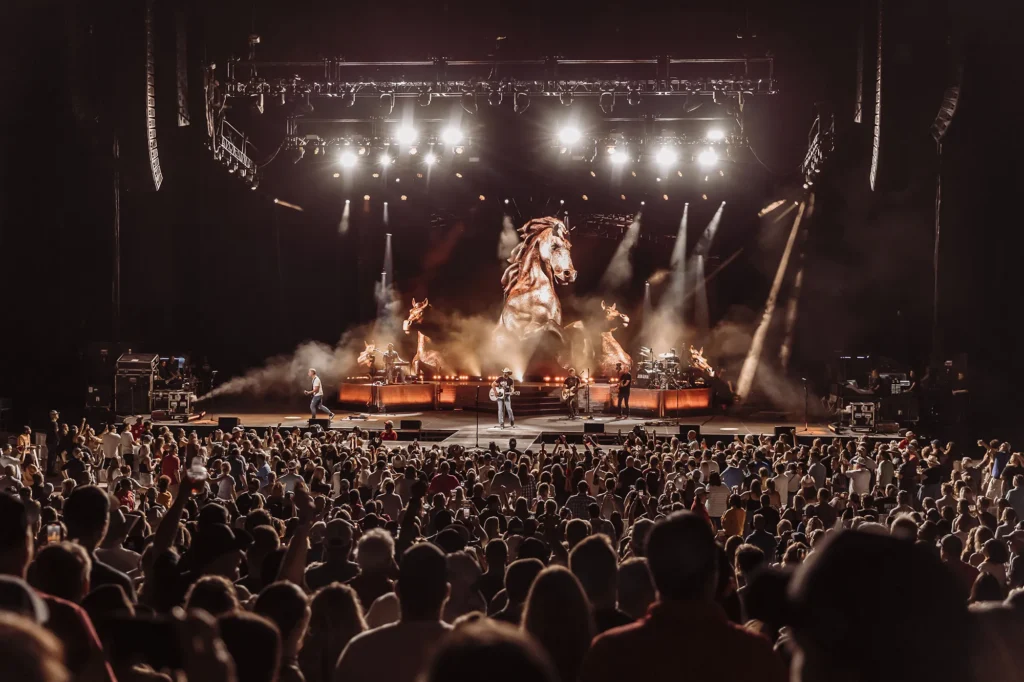
By 2026, we have entered the “Integrated Experiential” era. Festivals are no longer just music events; they are “Brand Municipalities.” They utilize high-fidelity spatial data to map crowd flow and “Acoustic Modeling” to ensure that the Sound Pressure Level (SPL) is consistent across thousands of square meters. The evolution has moved from “surviving the weekend” to “optimizing the second.” The focus is now on “Frictionless Utility”—the idea that every physical or digital interaction should be instantaneous and intuitive.
Conceptual Frameworks for Festival Excellence
1. The “Resonance-to-Friction” Ratio
This framework measures the ratio between the “Peak Moments” (the music) and the “Trough Moments” (waiting in line, traveling between stages). A world-class festival aims for a 10:1 ratio. If an attendee spends 30 minutes in a queue for every 30 minutes of music, the festival is a failure, regardless of the lineup.
2. The “Acoustic Sovereignty” Model
This mental model dictates that each stage must exist in a “Sonic Vacuum.” In poorly planned festivals, the bass from the EDM stage often bleeds into the folk stage. Excellence is achieved through “Topographical Sound Design”—using hills, shipping containers, or specialized speaker orientation to ensure that the “Audio Narrative” of one stage never compromises another.
3. The “Crowd Agency” Framework
This looks at how much control an individual has over their environment. Can they find shade easily? Can they exit a dense crowd without physical contact? High-tier festivals design for “Low-Density Pockets” even at peak capacity, recognizing that the feeling of “Entrapment” is the primary driver of attendee anxiety.
Key Categories of Premier Festivals and Strategic Trade-offs
The American circuit is segmented by “Operational Philosophy.” Each category offers a specific set of trade-offs.
| Category | Primary Example Style | Strength | Structural Trade-off |
| Metropolitan Mega-Festival | Lollapalooza, ACL | Accessibility; Infrastructure. | Lack of “Escape”; 10:00 PM Curfews. |
| Destination Remote | Coachella, Burning Man | Total Immersion; Landscape. | Logistical Complexity; High Travel Cost. |
| The “Camping” Community | Bonnaroo, Electric Forest | High Social Cohesion. | Sanitation Fatigue; Weather Exposure. |
| Boutique Curatorial | Big Ears, Newport Folk | High Cultural Fidelity. | Limited Scale; High Ticket Price. |
| Genre-Specific Institutional | Ultra, Stagecoach | Community Depth. | “Echo Chamber” Lineups; Crowding. |
| Urban Multi-Venue | SXSW, Treefort | Discoverability; City Integration. | High “Transit Friction”; Variable Audio. |
Detailed Real-World Scenarios and Decision Logic
Scenario A: The “Heat Dome” Adaptation
A major festival in the Coachella Valley faces a 115°F weekend.
-
The Logic: Instead of just increasing water stations, the “Best” festivals utilize “Subterranean Cooling” and “High-Pressure Misting Grids” that lower the ambient temperature by 20 degrees in shaded zones.
-
The Decision: The organizer sacrifices 5% of the “Stage Visuals” budget to fund a “Medical Cooling Hub.”
-
The Outcome: Zero heat-stroke incidents and a 90% “Attendee Retention” through the hottest hours of the day.
Scenario B: The “Conflict-Free” Scheduling Paradox
A festival has three major artists playing at the same time on different stages.
-
The Logic: Utilizing “Crowd Telemetry” from previous years to predict “Migration Patterns.”
-
The Decision: Widening the “Arterial Paths” between the two most likely competing stages by 30 feet, even if it reduces the footprint of a profitable bar.
-
The Outcome: A smooth transition between sets with zero “Choke Points,” maintaining a Level C (safe) crowd density during the peak surge.
Planning, Cost, and Resource Dynamics
The economics of a premier festival are often invisible to the public. For a “Top 10” US festival, the budget is frequently allocated with a heavy bias toward the “Non-Musical” components.
Estimated Resource Allocation for a 50,000-Attendee Daily Site
| Category | Percentage of OpEx | Primary Variable | Success Metric |
| Infrastructure & Site | 25% | Terrain/Permitting | 0% Utility Failure |
| Talent & Booking | 35% | Currency/Exclusivity | Ticket Velocity |
| Safety & Medical | 15% | Crowd Profile | <10 min Response Time |
| Production & AV | 15% | Weight/Power Draw | 110dB Clear Coverage |
| Logistics & Waste | 10% | Distance/Volume | “Clean-to-Ground” |
The Opportunity Cost of “VIP-ification”: Many festivals are shifting toward a 40% VIP footprint to stabilize revenue. The “Best” festivals, however, monitor the “Second-Order Effect”: if the general admission area becomes too cramped or poorly serviced to accommodate the VIP expansion, the “Energy of the Mass” dies, eventually killing the prestige that VIPs pay for.
Tools, Strategies, and Support Systems
-
Digital Twin Modeling: Creating a virtual replica of the site to test how 60,000 people will react to a sudden lightning storm evacuation.
-
LiDAR Crowd Monitoring: Using light-detection sensors to identify “Density Spikes” before they become “Crushes.”
-
Parametric Insurance: Policies that payout automatically based on wind speeds or rainfall, ensuring the festival stays solvent even if a day is cancelled.
-
N+1 Power Redundancy: Ensuring that for every primary generator, there is a “Shadow” unit running in sync, preventing “Black-Start” delays if a unit fails.
-
Acoustic Dampening Arrays: Using “Cardioid Sub-Arrays” to project bass forward while cancelling it out behind the stage, protecting the sonic integrity of adjacent areas.
-
RFID “Cashless” Ecosystems: Reducing “Transaction Friction” to under 3 seconds per purchase, maximizing concession revenue while minimizing queue times.
-
Biometric Ingress: Utilizing facial or fingerprint recognition to eliminate “Ticket Fraud” and speed up entry to under 10 seconds per person.
Risk Landscape: The Taxonomy of Experience Failure
-
The “Sanitation Threshold”: The point where the “Sanitation Ratio” (toilets per person) fails. This is the #1 predictor of attendee dissatisfaction. Once wait times exceed 10 minutes, the “Social Temperature” of the crowd rises dangerously.
-
The “Information Vacuum”: When the mobile app or signage fails during a schedule change. Confusion leads to erratic movement, which leads to “Cross-Flow” collisions between different crowd streams.
-
The “Security-to-Safety” Delta: Hiring “Enforcement-Style” security rather than “Stewardship-Style” staff. High-tension security often provokes the very aggression they are meant to prevent.
Governance, Maintenance, and Long-Term Adaptation
Stability in a festival brand is maintained through “Review Cycles.”
-
The “Hot Wash” Protocol: A mandatory meeting 24 hours post-event where every department lead identifies “The Near Misses”—the things that almost broke but didn’t.
-
Environmental Stewardship: Transitioning from “Waste Removal” to “Zero-Waste Circularity.” In 2026, the “Best” festivals compost 90% of their organic waste on-site.
-
Community Governance: Maintaining a “Year-Round” relationship with the host city. A festival that only appears once a year and provides no local “Social Dividend” is prone to permit revocation as political climates shift.
Measurement, Tracking, and Evaluation Metrics
-
Leading Indicator: “Pre-Registration Momentum”—not just tickets sold, but the demographic “Spread” of the buyers.
-
Lagging Indicator: “Chargeback Ratio”—the percentage of attendees who contest their ticket price due to a perceived failure in service.
-
Qualitative Signal: “The Silent Walk-out”—monitoring how many people leave a headliner set early. This is the ultimate metric for “Lineup Fatigue” or “Audio Poorness.”
Common Misconceptions and Oversimplifications
-
“The lineup is all that matters.” In reality, the “Site Map” is more important for long-term retention.
-
“VIP areas are just for money.” They are essential “Load Balancers” that reduce pressure on General Admission resources.
-
“Festivals are bad for the environment.” While historically true, the 2026 “Best” tier festivals are often “Net-Positive” through carbon-offsetting and advanced filtration.
-
“Camping festivals are cheaper.” Between the water haulage, security, and portable power, the “Per-Head” operational cost of a camping festival is 40% higher than an urban one.
-
“All stages are the same.” The difference between a “Stage” and a “Sound System” is profound. A premier festival treats the entire field as a calibrated instrument.
-
“Security is there to catch people.” Professional security is there to guide people. Ejections are a failure of the “Social Architecture.”
Ethical and Contextual Considerations
The ethics of the modern American festival are increasingly centered on “Accessibility” and “Labor Integrity.” In 2026, a festival cannot be considered “the best” if its back-of-house staff are underpaid or if its site is inaccessible to those with physical disabilities. We are seeing a move toward “Universal Design”—where the ramps, viewing platforms, and sensory-friendly zones are integrated into the primary architecture, rather than added as an afterthought.
Conclusion
Determining the best music festivals in the us is an exercise in analyzing “Logistical Grace.” As we move deeper into the 2020s, the festivals that will endure are not those with the loudest marketing, but those that respect the “Human Scale.” The definitive American festival is a resilient, adaptive, and highly tuned ecosystem that provides a safe harbor for the collective experience.